
Little Spotted Kiwi 2017
Plans are well advanced for the reintroduction of Little Spotted Kiwi to Shakespear Open Sanctuary in 2017 . While SOSSI has made good progress in securing the necessary funds, we are still short of the our total (around $35,000) and so are seeking your support for this project.
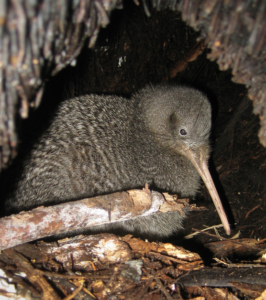 The smallest of our five kiwi species, little spotted kiwi number just over 1500 birds across some eleven sites. Kapiti Island is the stronghold for this species (1200+ birds). As overall population growth and species security is constrained by suitable habitat, these kiwi are managed nationally as a ‘metapopulation’. A metapopulation is defined ecologically as ‘a group of populations that are separated by space but consist of the same species.
Shakespear offers a reasonably large safe habitat (500ha) which can significantly contribute to overall population growth. By taking care with the composition of the founder population the Shakespear kiwi population can both redress current population bottlenecks at other sites and be best suited to create a new genetically robust population. Over the 2017-2020 period birds will be moved out of crowded islands such as Tiritiri Matangi to Shakespear and those gaps ‘backfilled’ with new stock from Kapiti. Other new stock then comes from Kapiti to Shakespear to be ‘matched’ with the Tiritiri Matangi birds. The process may take several years depending on the rate of ‘harvest’ which Kapiti Island can sustain.
The first stage involves moving 10 males from Kapiti and 10 females from Tiritiri Matangi (and replacing them with Kapiti birds). The total estimated cost is around $60,000, made up mostly of hiring approved handlers and dogs to locate and capture birds, buying radio trackers for each bird, plus transport and other overheads. In a few years a further 20 kiwi will come from Kapiti (at yet more cost).
If you’d like to help please go to our donation page to pay by cheque, direct credit or Paypal. For donations by credit card please use the Givealittle button in the sidebar.
Thanks to Andrew Digby Photography for the photos.
