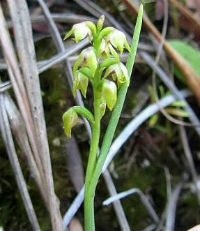
Uncommon orchid found

Corunastylis pumila
Corunastylis pumila

In a recent visit members of the Auckland Botanical Society identified a native orchid growing in the Park. Corunastylis pumila is a tiny orchid which is described as being naturally uncommon and easily overlooked because of its small size and autumn flowering.It is most often recorded from Northern North Island south to about Kawhia, East Cape and Bay of Plenty.

It requires open, sparsely vegetated and relatively unfertile habitats such as gumland scrub. Habitats which are artificially maintained such as track and roadsides are a possible location, often in regenerating Kauri forest.

Similar Posts

  • |

    Whiteheads arrive

    There are some gregarious new residents at Shakespear Regional Park! While other birds have repopulated the area naturally since pests were removed, recent events saw the first release of native birds behind the predator-proof fence. In July 2015, after many months of behind-the scenes work, a group of bird translocation experts and experienced volunteers caught…

  • |

    More robins

    Another 20 robins have now arrived at Shakespear, this time from nearby Tiritiri Matangi. This brings the total to 40, which should be enough to establish a permanent population. Update Aug 2016: Here is a new iseevideo documentary about translocation. It is 15 minutes long and very informative. The earlier and shorter version is below.

  • |

    Bags of batteries

    During the past year we have had automatic cameras doing a number of jobs or us – watching the pest-proof fence for any unwanted visitors, watching the seabird nesting boxes and watching some special sites for bell-birds. The photo right shows some recent activity near the seabird sites – a pair of fluttering shearwaters showing…

  • |

    Hauraki Gulf Survey

    A long-term planning process for the Hauraki Gulf called Sea Change is under way. It is intended to secure a healthy, productive and sustainable future for the Hauraki Gulf. The first stage involves finding out which places people visit – sea, coast, and islands – and why they value these locations, and you can give…

Leave a Reply

Your email address will not be published. Required fields are marked *