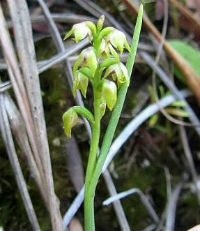
Uncommon orchid found

Corunastylis pumila
Corunastylis pumila

In a recent visit members of the Auckland Botanical Society identified a native orchid growing in the Park. Corunastylis pumila is a tiny orchid which is described as being naturally uncommon and easily overlooked because of its small size and autumn flowering.It is most often recorded from Northern North Island south to about Kawhia, East Cape and Bay of Plenty.

It requires open, sparsely vegetated and relatively unfertile habitats such as gumland scrub. Habitats which are artificially maintained such as track and roadsides are a possible location, often in regenerating Kauri forest.

Similar Posts

  • | |

    Have you seen a bulbul?

    The destructive and aggressive red-vented bulbul has now been seen in several parts of Auckland, including our Whangaparaoa Peninsula. Evidently they like nice gardens and compost heaps, especially one with food scraps. If you see one please record the time and place, take a photo if you can and call Biosecurity on 0800 80 99…

  • |

    Bags of batteries

    During the past year we have had automatic cameras doing a number of jobs or us – watching the pest-proof fence for any unwanted visitors, watching the seabird nesting boxes and watching some special sites for bell-birds. The photo right shows some recent activity near the seabird sites – a pair of fluttering shearwaters showing…

  • |

    Robins are coming

    Now that whiteheads have been successfully re-introduced to Shakespear the next step is to bring back the North Island robin (toutouwai). These are very sociable little fellows, often to be seen foraging just a few meters away. They are also known to sing loud and long so we expect they will be a popular attraction….

  • | |

    Pampas Grass

    Pampas grass is our featured pest plant this month, because right now its seed heads are evident everywhere in our district.   The plants form large grassy clumps with a dead leaf base. Its erect and bushy flower heads are quite attractive and easily recognised, emerging  January to March, but unfortunately they are prolific producers of seeds which then blow…

Leave a Reply

Your email address will not be published. Required fields are marked *